

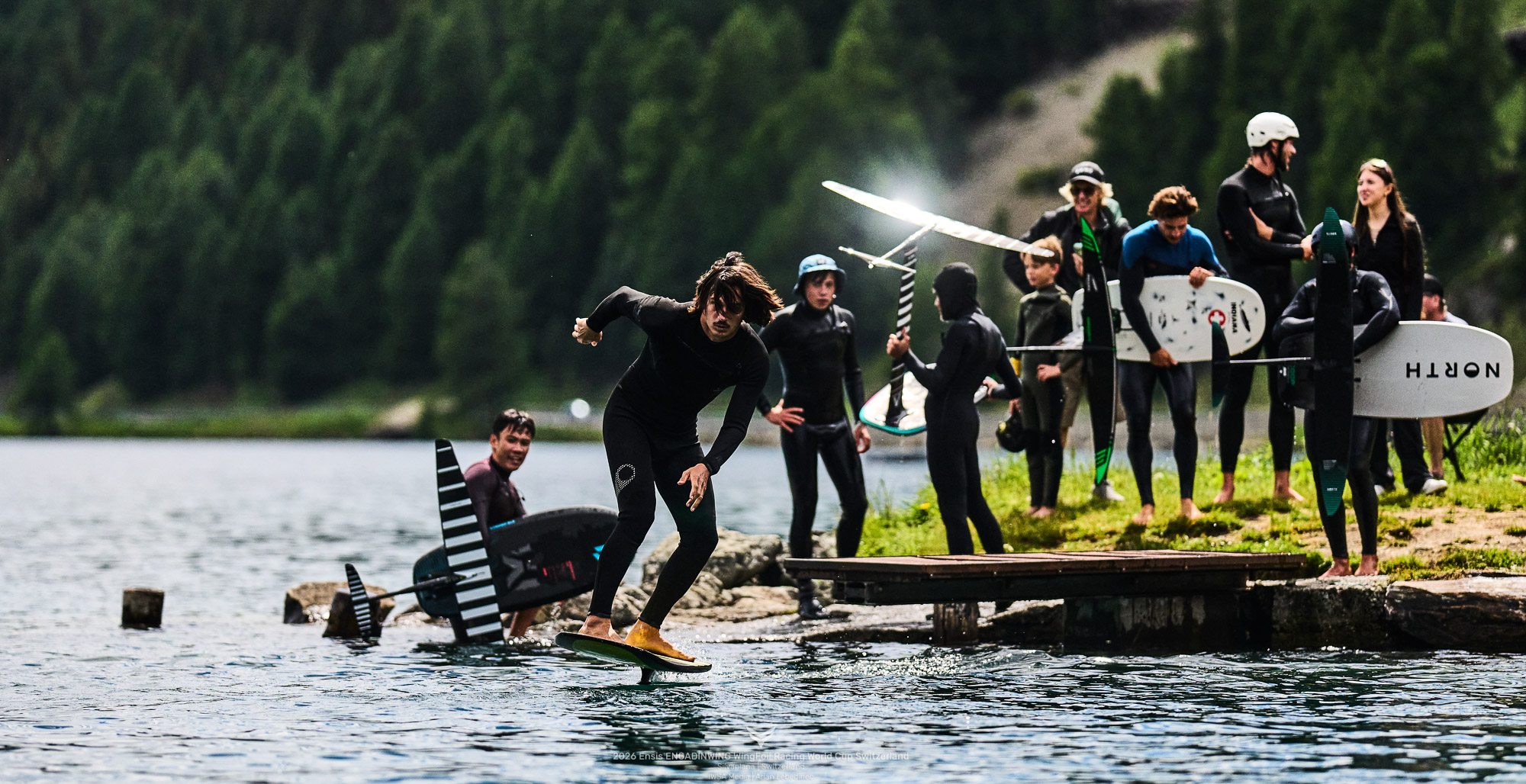
The second morning of the Ensis ENGADINWING WingFoil Racing World Cup greeted the international fleet with brilliant sunshine and spectacular views over the stadium racing area of Lake Silvaplana. While the pristine conditions in the Engadin Valley raised hopes for the arrival of the legendary thermal Maloja wind, a difficult weather pattern with stronger winds at higher altitudes obstructed the thermal build-up.
 © IWSA media/Robert Hajduk
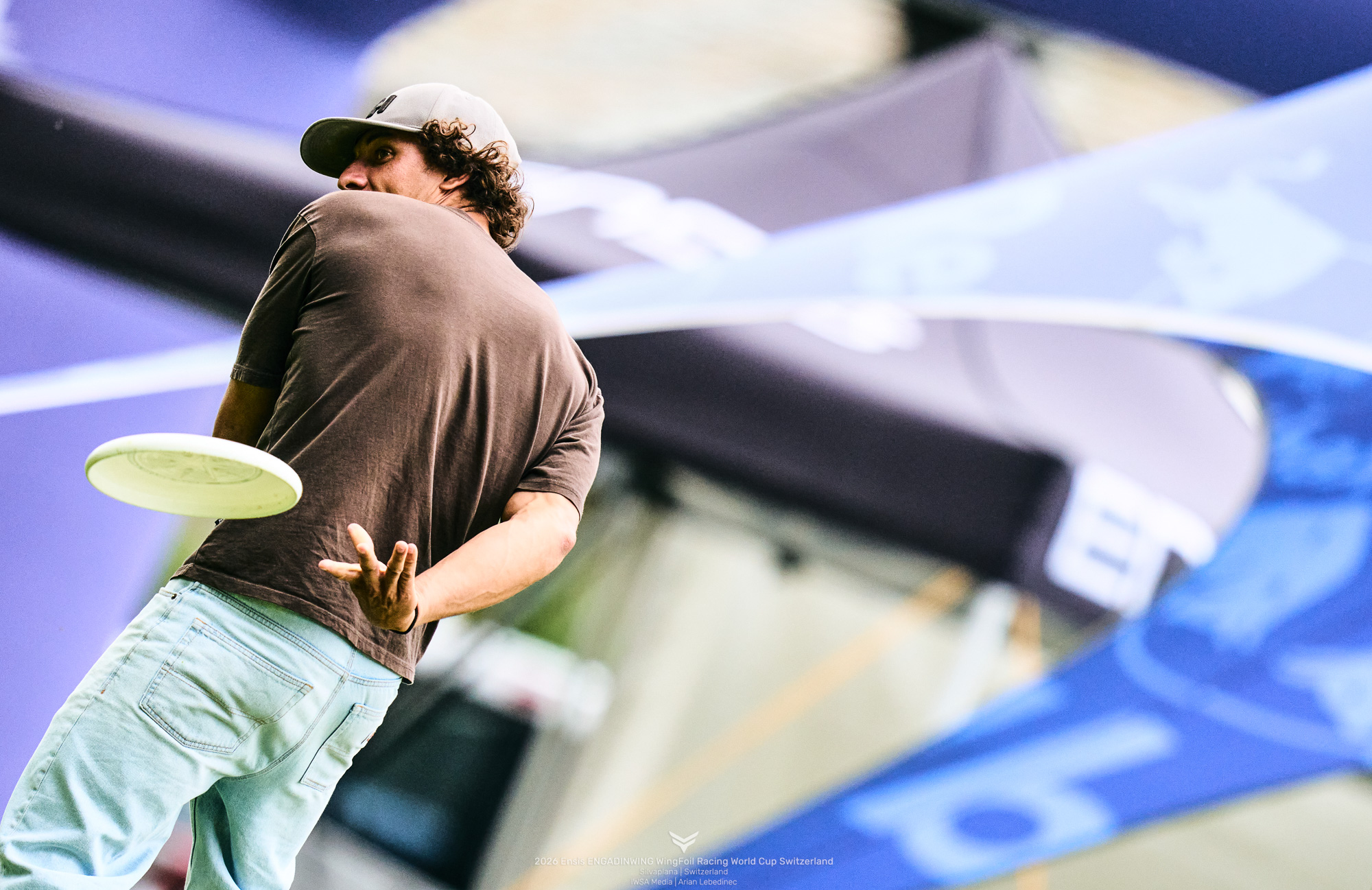
Shore-side Showmanship: Waiting Time Reveals Unexpected Talents
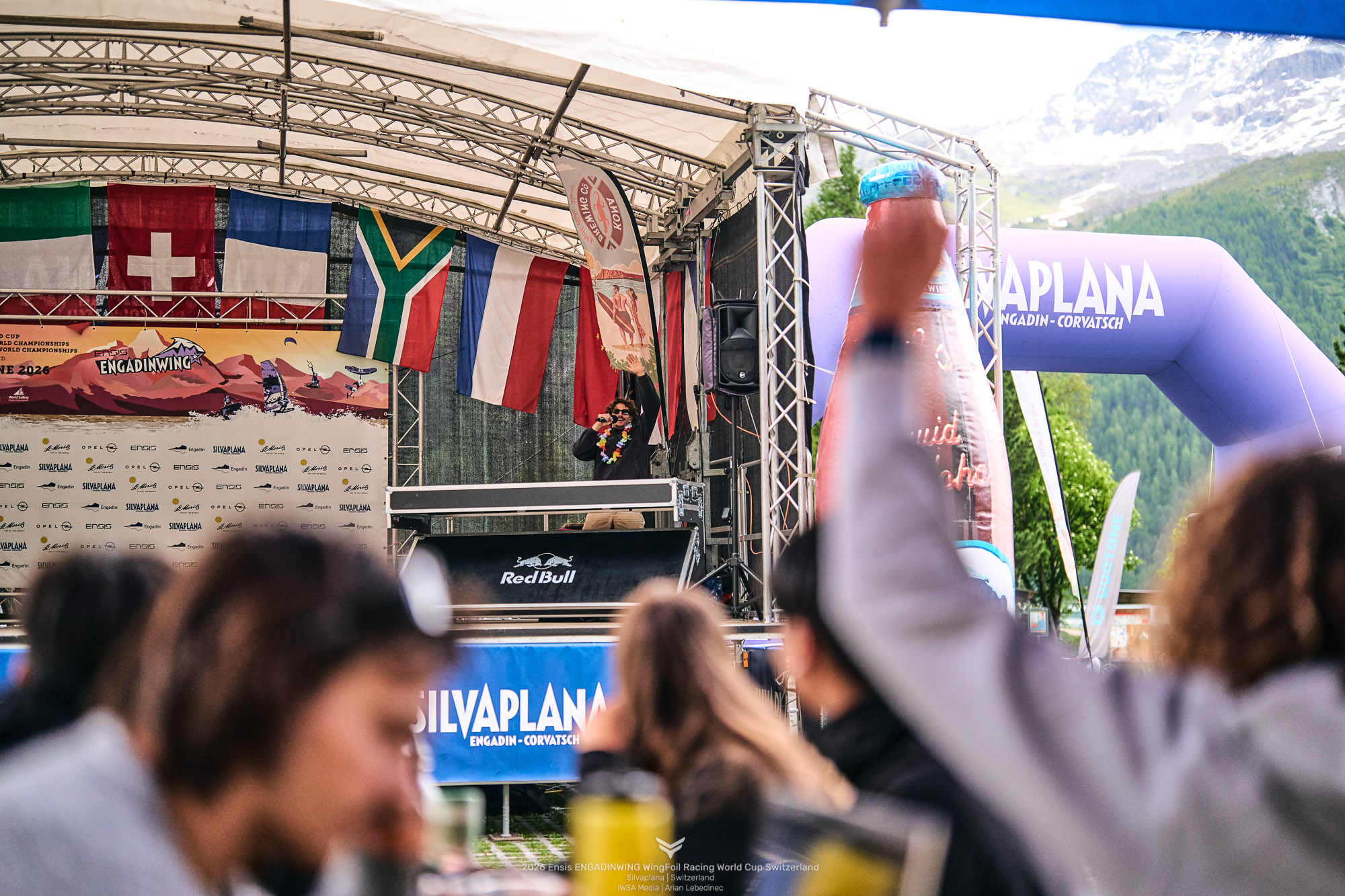
With no racing possible on the water, the action shifted to the event stage, where Julien Rattotti (FRA) proved he has talents beyond high-speed foiling. Stepping onto the stage and taking the microphone, the 2026 European Champion entertained the crowds as a singer and show master. He was quickly joined by a makeshift "World Cup band" featuring Francesco Cappuzzo (ITA), Carol Medeiros (BRA), and local organizer Christian Mueller. However, the performance came to an abrupt halt following a noise complaint from a nearby restaurant, forcing the athletes to trade their musical ambitions back for technical preparation.
 © IWSA media/Robert Hajduk
The Science of Altitude: Adapting to Alpine Freshwater
The technical dialogue dominated the shoreline as riders worked to solve the unique puzzle of the Engadin. Racing at 1800m above sea level presents a physical challenge for the riders' lungs and a mechanical challenge for their gear. New Zealand’s Sean Herbert, widely regarded as a mastermind of equipment development, gave some explanation how the environment alters performance.
The combination of low water temperature and the lack of salinity in the crystal-clear mountain lake creates an approximate 2% difference in water density compared to the ocean. This shift requires precise mechanical adjustments; riders are currently experimenting with different foil sanding grits, mast angle adjustments, and modified foot strap settings to find the optimum balance in the less buoyant freshwater.
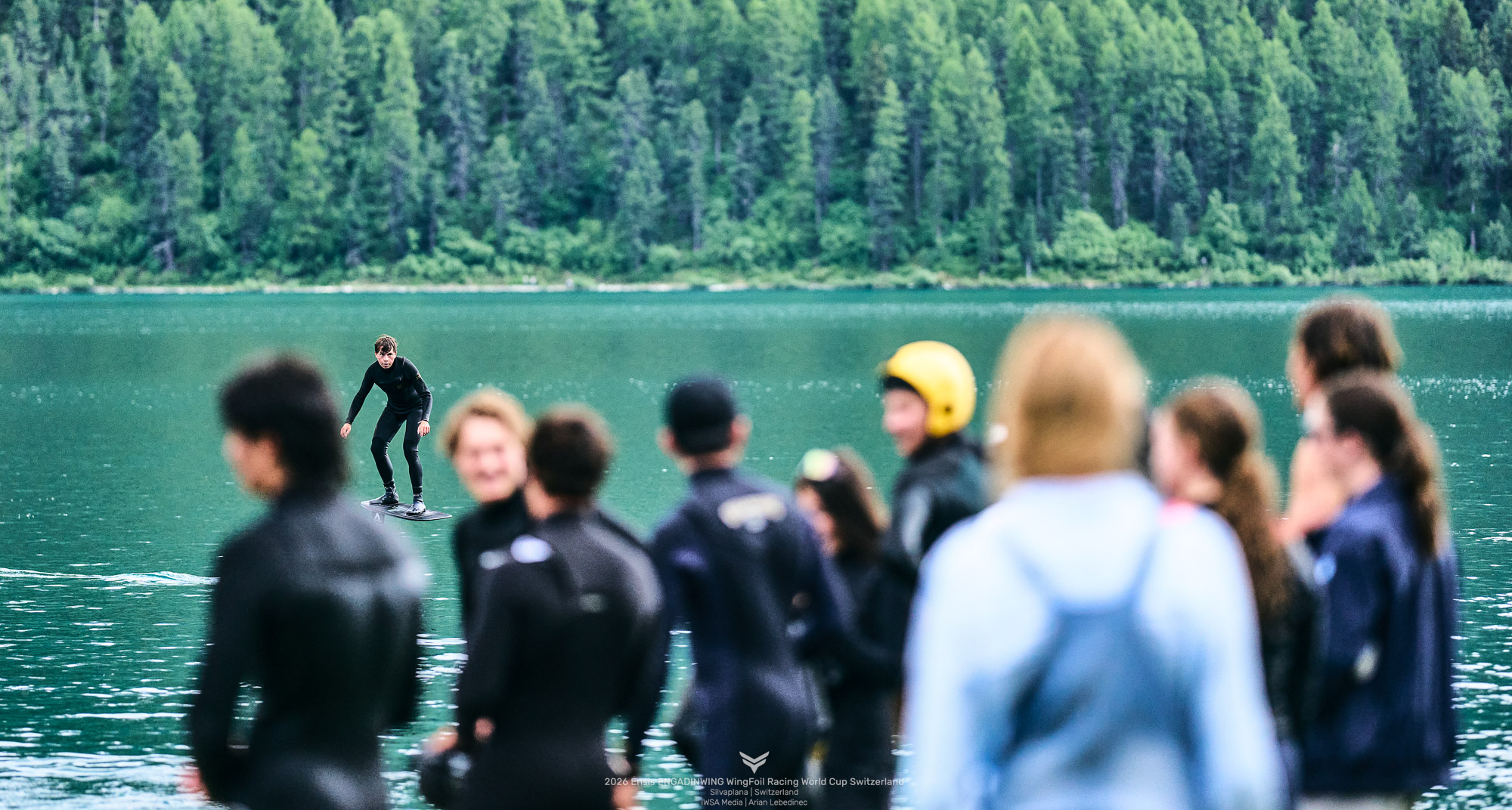
In the meantime, a large group of competitors took to the water for a collective pump-foil session, showcasing their ability to generate flight through pure physical output without the use of a wing. This served as a vital training exercise to help the athletes' bodies assimilate to the high altitude and lower oxygen levels while maintaining a fun group dynamic.
 © IWSA media/Robert Hajduk
"Level Up" Initiative
Parallel to the physical training, the IWSA media team, with the support of top riders like Jeremiah McDonald (NZL), officially launched a new media format titled “Level Up.” This initiative invites wingfoil enthusiasts to submit videos of their own riding struggles to the IWSA social channels. In return, the World Cup stars provide expert analysis and technical advice, helping the global community bridge the gap between amateur and professional foiling
 © IWSA media/Robert Hajduk
Looking Ahead to Day 3
The forecast for tomorrow, June 18, looks promising so that the race committee has set an ambitious program consisting of two sessions with a total of eight action-packed short-track races.
The first warning signal is scheduled for 11:30 local time. Fans can follow to competition via live tracking and IWSA social media updates.