

The Wingfoil Racing World Cup entered a decisive new phase on Friday as Alessandro José Tomasi surged to the top of the overall standings with a commanding clean sweep of the opening Gold Fleet races in Gizzeria. In the women's competition, Vaina Picot suffered her first significant setback of the regatta, although the French teenager remains firmly on course for Sunday's medal series.
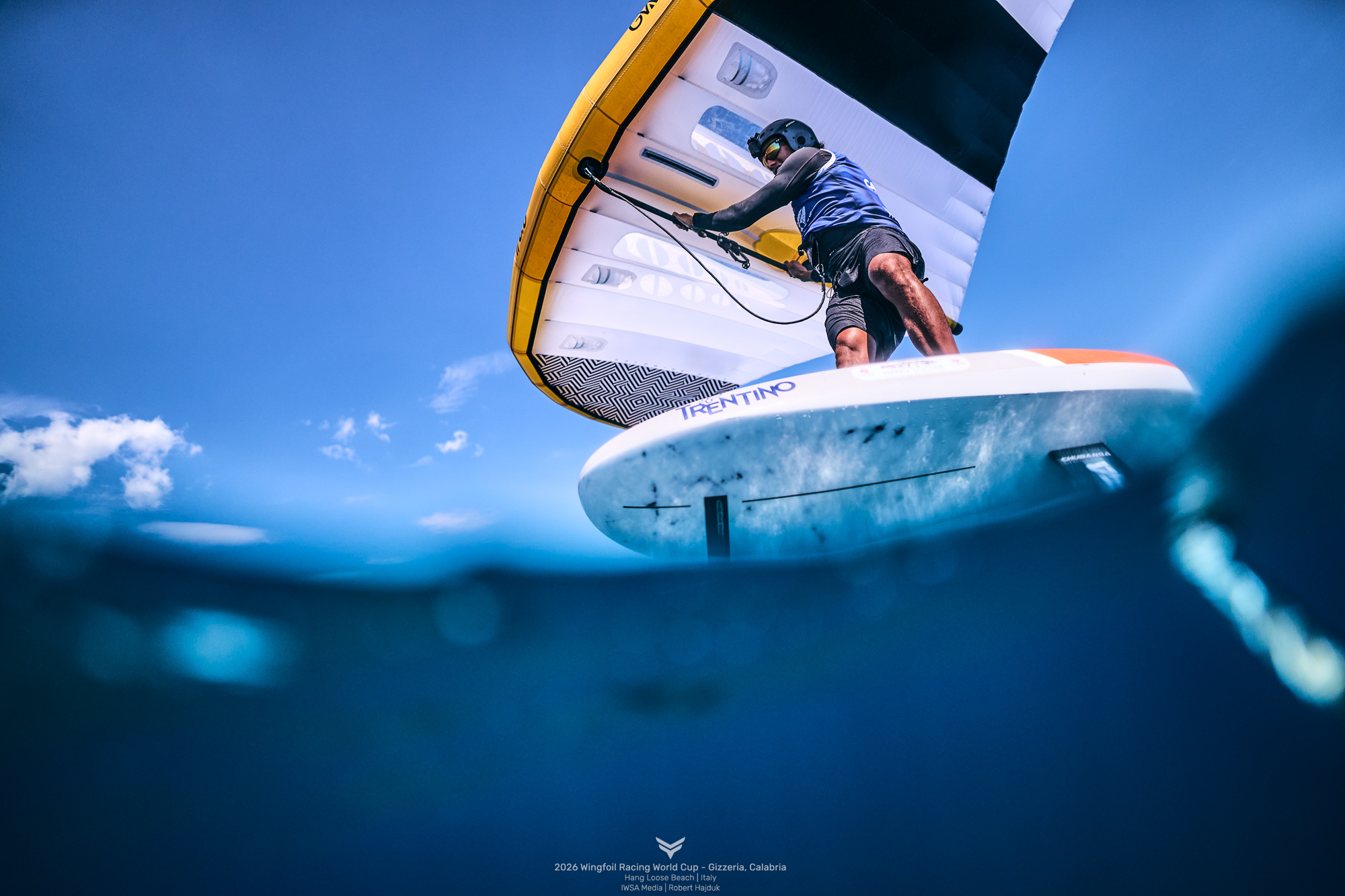
© IWSA media/Robert Hajduk - Alessandro Jose' Tomasi
The third day of competition also marked the split into Gold and Silver Fleets, with only the top nine men after Saturday's racing earning a place in the medal series and a chance to compete for a share of the €10,000 prize fund. Tomasi's three straight victories moved the Italian ahead of New Zealander Sean Herbert in the overall standings, while four Italians now occupy the coveted qualification places.
The familiar thermal breeze arrived over the Hang Loose Beach Club shortly after midday with its customary precision, but what is normally a steadily building afternoon wind never fully developed. Racing got underway on schedule in around 10 knots from the west, only for the breeze to gradually fade throughout the afternoon. As a result, organisers were forced to abandon half of the planned programme, with each fleet completing just three of the six scheduled races.
France is also strongly represented, with Thomas Proust occupying fourth place after another consistent display. The French contingent arrived at the venue in buoyant spirits following their national football team's progression to the World Cup semi-finals the previous evening, and their confidence appeared to carry onto the water.
© IWSA media/Robert Hajduk - Light winds forced a delay and then abandonment
Picot's rare mistake
The women's fleet witnessed an unusual moment of vulnerability from the otherwise dominant Vaina Picot. Having won 11 of the opening 12 races of the regatta, the Frenchwoman suffered an extraordinary sequence of mishaps.
Her wing caught the water during one manoeuvre, flipping her into the sea. Although she recovered quickly, water trapped inside the wing upset its balance, sending her crashing into the water for a second time. The incident left Picot with an uncharacteristic sixth-place finish.
Despite the setback, Picot remains firmly on course for automatic qualification for the final, with Italy's Maddalena Spanu comfortably holding second overall. Spanu enjoys an 18-point advantage over Greece's Aimilia Kosti in third, meaning only a dramatic collapse on Saturday is likely to prevent the leading pair progressing directly to the Medal series final.
Italy's Lara Cristina Tallarico pulled off another great performance. The Under-17 rider secured a third place finish - her best result of this competition so far. The youngster is looking strong and confident against vastly more experienced opposition.
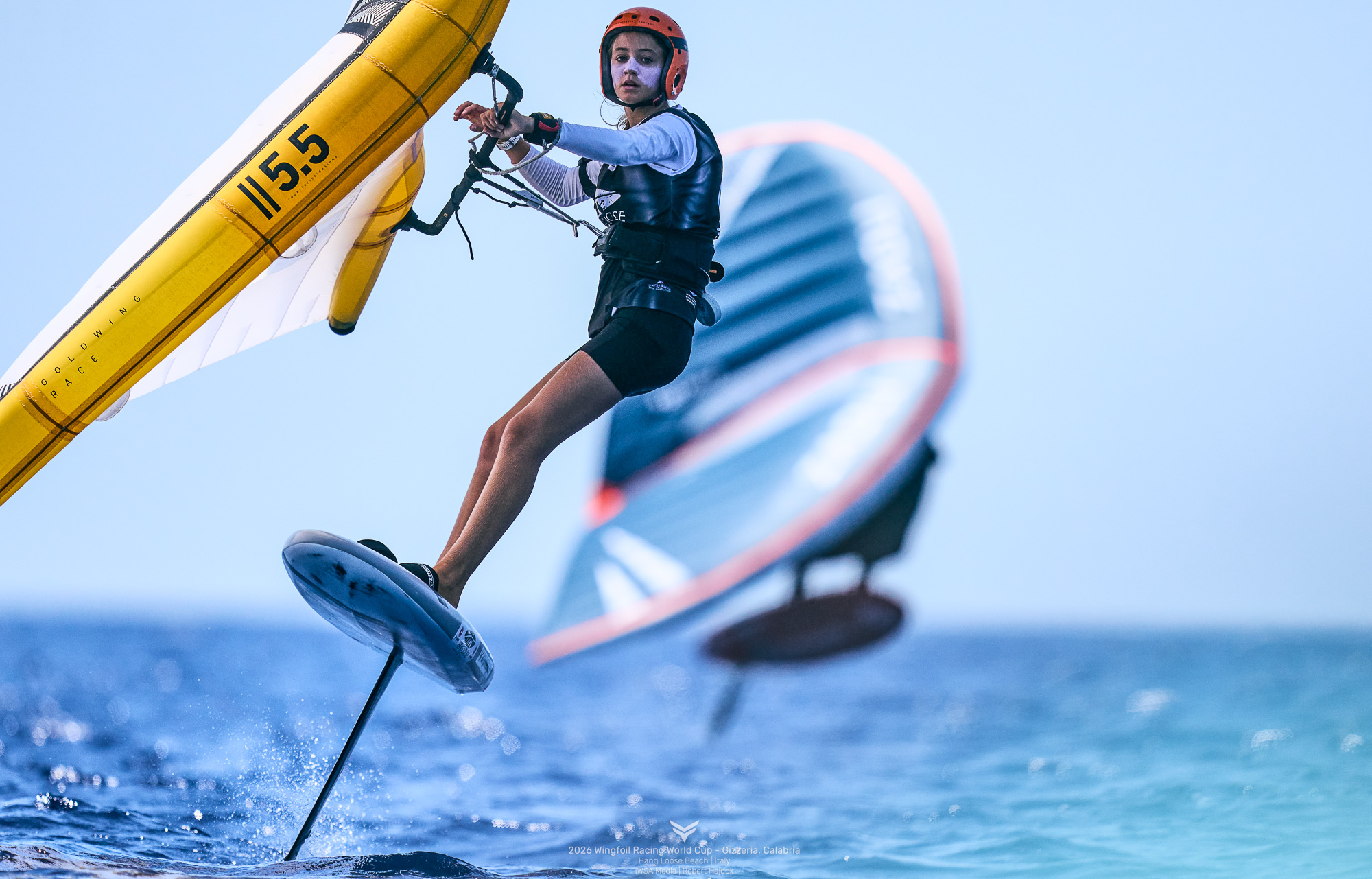
© IWSA media/Robert Hajduk - Lara Cristina Tallarico (ITA)
Winning today, building for tomorrow
Away from the racing, the World Cup also serves as one of the sport's most important development laboratories.
Wingfoil's open equipment regulations encourage manufacturers to test prototype wings and foils in genuine competition, making the boat park almost as fascinating as the racecourse itself. Experimental equipment is often hidden beneath covers to protect commercial secrets, while riders balance the pursuit of immediate results against the promise of future gains.
Mathis Ghio, the four-time World Cup champion from France, believes the sacrifice is worthwhile.
"Personally, I see it as an investment for next year," he said. "You might lose a bit this season but I'm looking ahead to next year and developing a winning weapon for next season. So testing new equipment for the manufacturers is investing in your future success."
Italy's Nicola Spanu is among those trialling a new wing in Gizzeria and says the relationship between athlete and manufacturer has become increasingly sophisticated.
"A few years ago the feedback we gave was pretty broad because it was a new sport," he explained. "But the level is so much higher now so the quality of feedback we give has to be much more detailed. A tiny change can give a huge jump in performance."
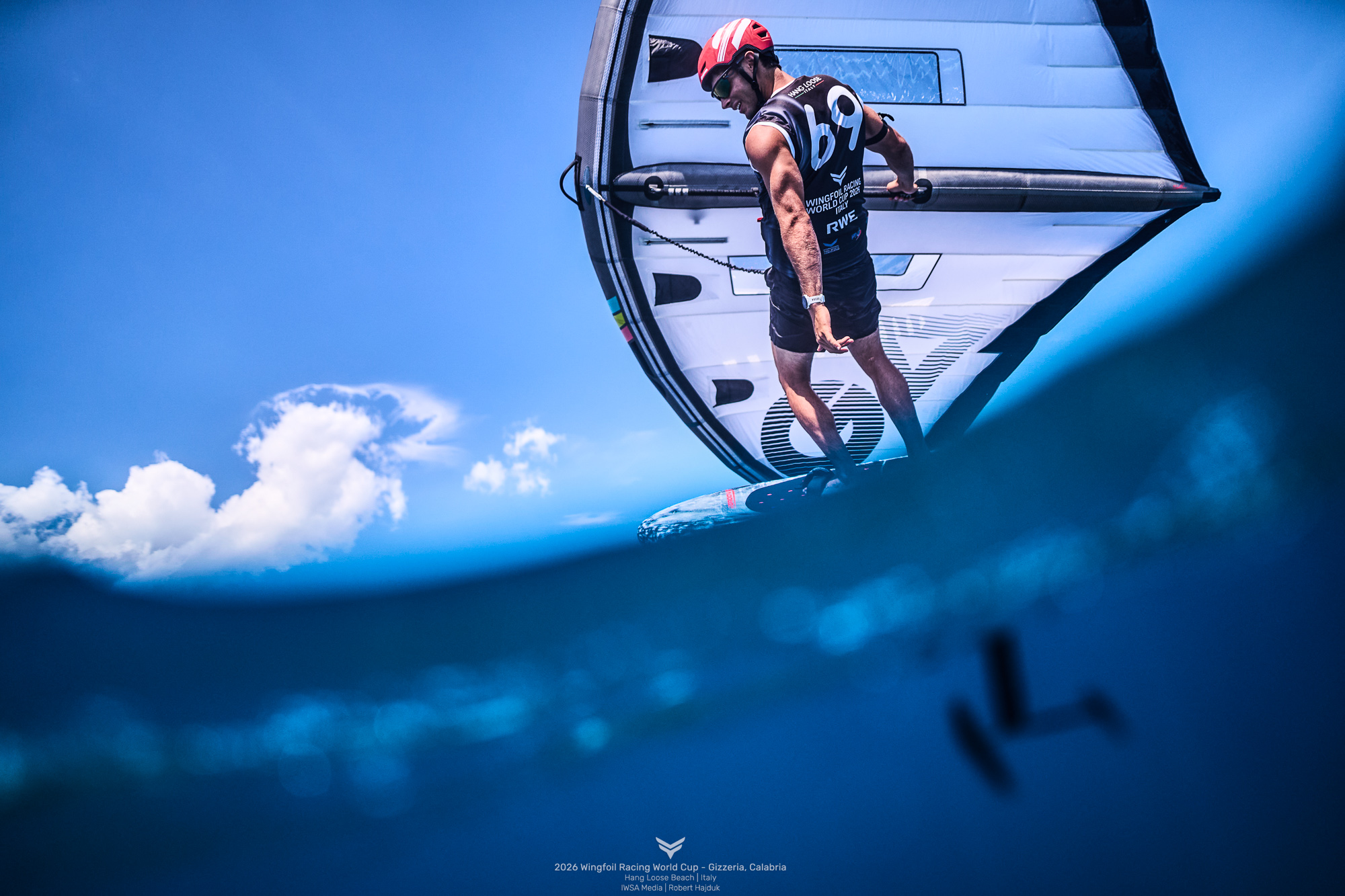
© IWSA media/Robert Hajduk - Nicola Spanu
For Ghio, that process extends well beyond instinct. The 23-year-old studies engineering at Lyon University and applies his academic knowledge directly to equipment development.
"When testing wings I use all the knowledge I get from my studies like Materials Science, which allows me to give very specific, technical feedback."
Working alongside wing manufacturer Ozone and Austrian foil specialist Levitaz, Ghio is currently evaluating both a prototype V4 wing for next season and a new light-wind foil.
"It's exciting to be involved," he said. "The foil is developed to get better performance when pumping upwind with a larger span. And my Ozone wing is a prototype for next year's V4. Testing in competition against the world's best means we can push the boundaries of development."
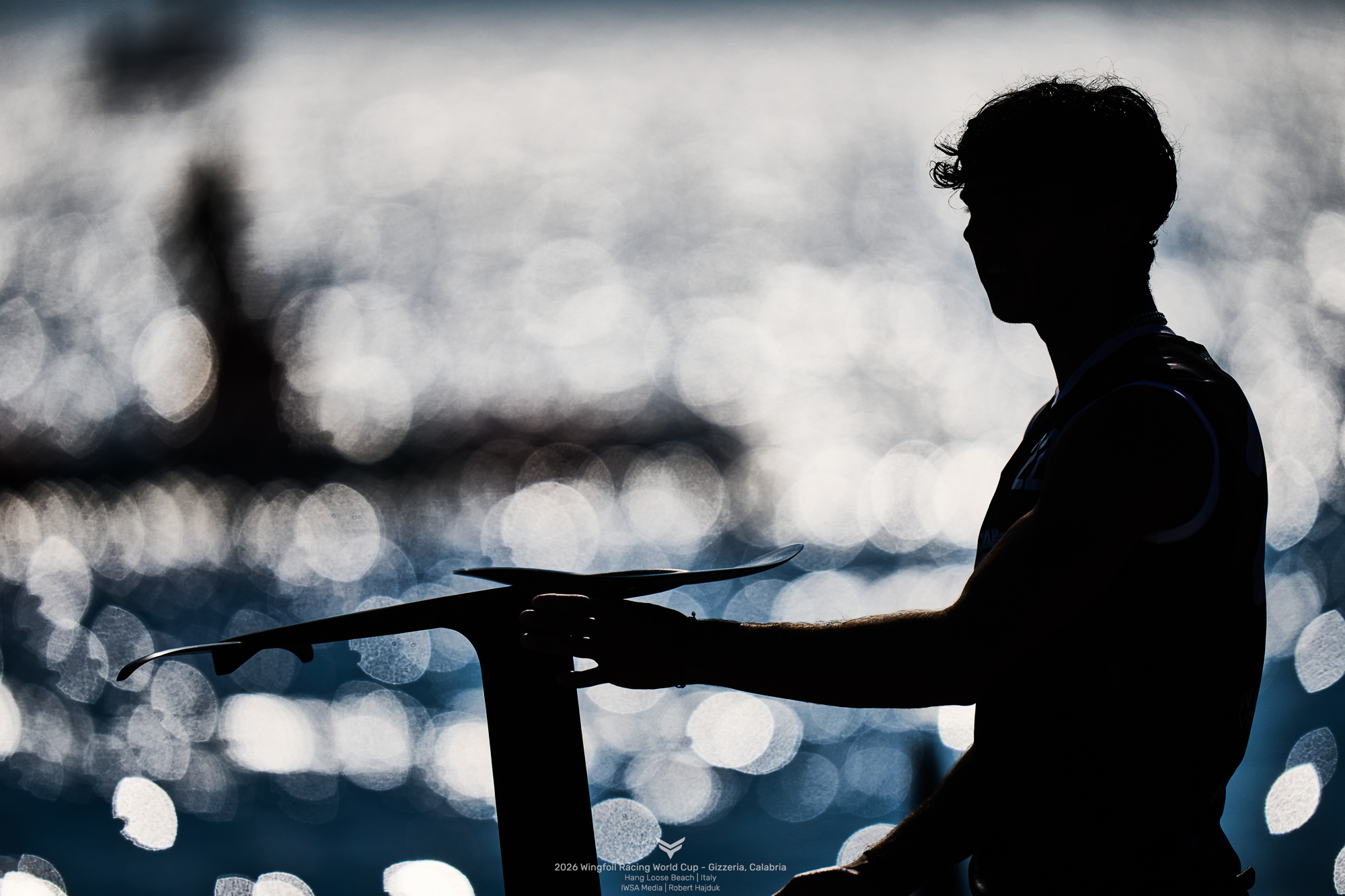
© IWSA media/Robert Hajduk - Equipment testing is all part of the game.
Margins everywhere
As Saturday's final fleet races determine who reaches Sunday's medal series, the competition is being decided not only by tactical brilliance and consistency, but also by relentless technological progress. Off the waters of Calabria, today's experiments with tomorrow's equipment may ultimately prove just as significant as the final result.
Words: Alec Wilkinson
Photos: Robert Hajduk